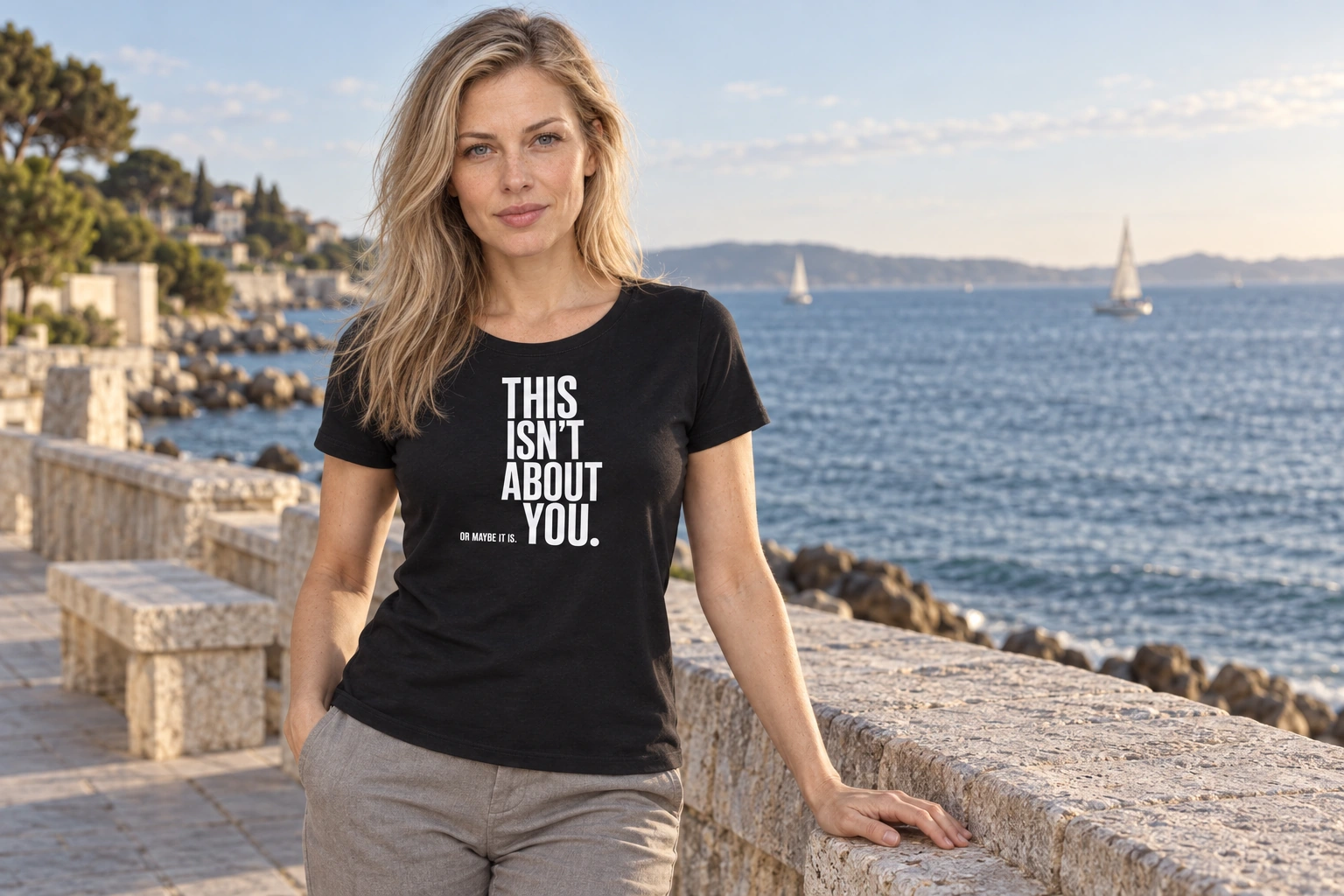
“This isn’t about you.” Clear enough. This does not concern you. You could move calmly on, except there is another line at the bottom left of the design: “Or maybe it is.”
Or maybe it is.
The small print has spoiled the big speech. It does not need to shout or even move into the centre. Four words are enough to leave both possibilities open. Now you have to decide which sentence to believe. The shirt will not decide for you.
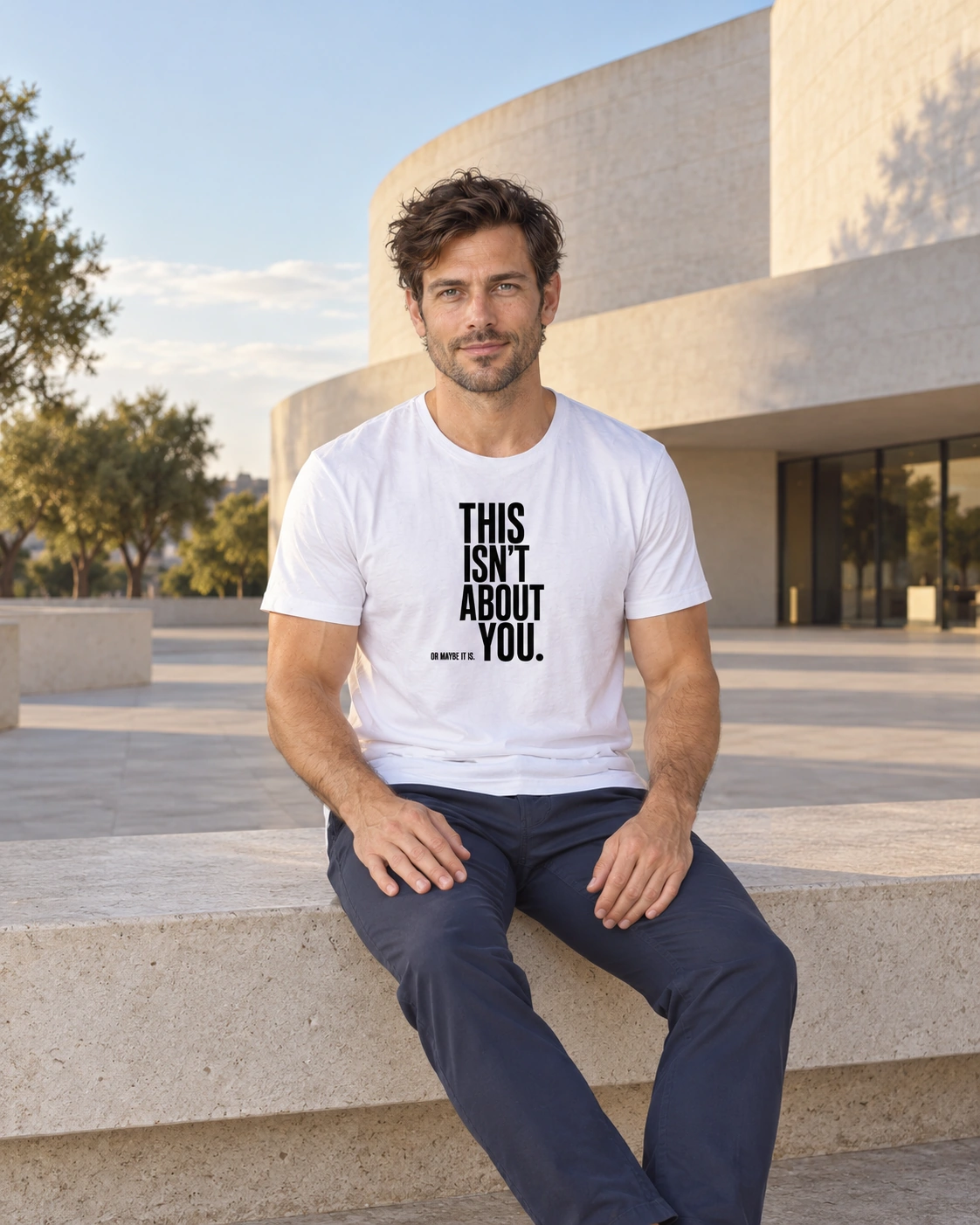
“This Isn’t About You” is built around those two readings. The main sentence stands in four tall lines on the chest. The letters are narrow and heavy, with a large full stop after the final “YOU.” Everything looks so conclusive that the matter might be taken off the agenda. The extra line below makes that finality doubtful.
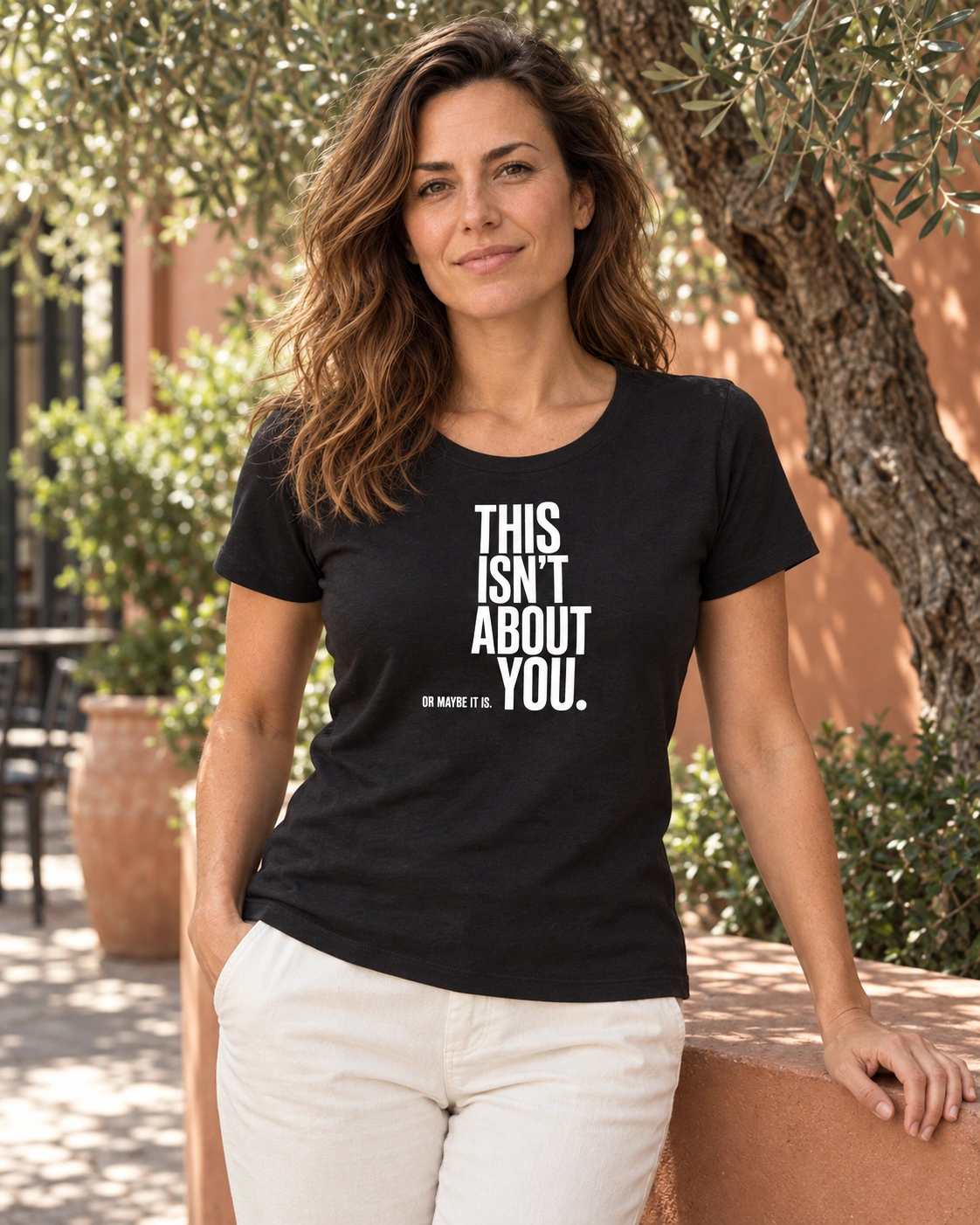
If both sentences were the same size and stood beside each other, they would simply be two opposing claims. As it is, a small delay develops between them. First you read the assurance. Then you find the qualification. Then you look at the assurance again, slightly differently this time. The design uses space to give the joke its timing.
Size is distributed rather unfairly here. The main sentence gets almost the entire surface, but the little aside decides how to read it. That is exactly what makes it interesting. The loudest part may not be the part you remember. Sometimes a sentence that initially looks almost like a footnote does all the work.
In the Soft But Wild story, the difference between two voices comes through the fonts. Here, the tension comes from size and position. The big print presents itself as certain knowledge. The small print allows itself some doubt. Together, the first becomes a little less reliable and the second far more important than its allotted space would suggest.
Who is it about, then?
That is a rather good question for a message T-shirt. The wearer chooses a sentence for themselves, but other people read it from their own perspective. “You” is an especially clever word: it has no name, yet every reader can briefly take that place. The words on the shirt do not need to know anyone to do it.
That does not mean every glance is a secret argument or every choice of shirt is a hint aimed at someone. Sometimes you simply like a joke whose ending tilts its beginning. The appeal of this design may be precisely that there is no single correct interpretation. You do not have to invent a person it is directed at.
Judging You also uses a word that addresses the reader, but names its activity straight away. Here even the connection remains open. Is it about you? Possibly. Is the wearer thinking about themselves and how easily everything can be taken personally? That reading fits too. The little extra line never fully confirms any answer.
That is why the joke works better with a little room around it. Every time you wear it need not come with a new explanation, and every reader need not arrive at the same place. The shirt lets you carry that ambiguity without scripting the whole conversation. A firm declaration and the chance to smile at it yourself can exist at the same time.
The full stop is certainly large. It still did not produce a final decision.
Anti
(the guy who makes these shirts)
Blacksunset.ee