“I needed a T-shirt.” A perfectly serviceable explanation. Short, practical, and unlikely to invite further questions. A longer version might mention the colour, the fit, or the fact that an old shirt has finally reached retirement.
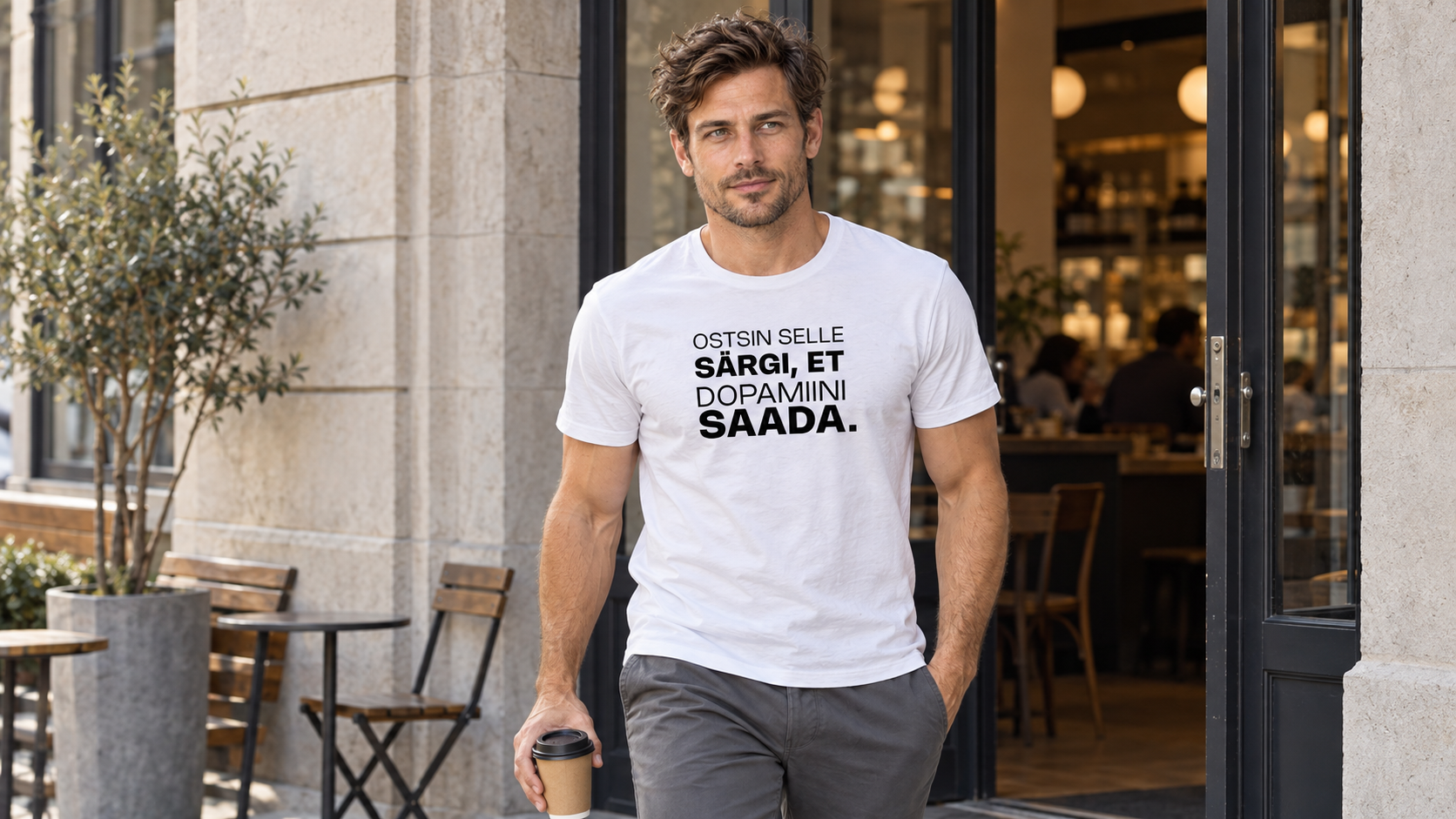
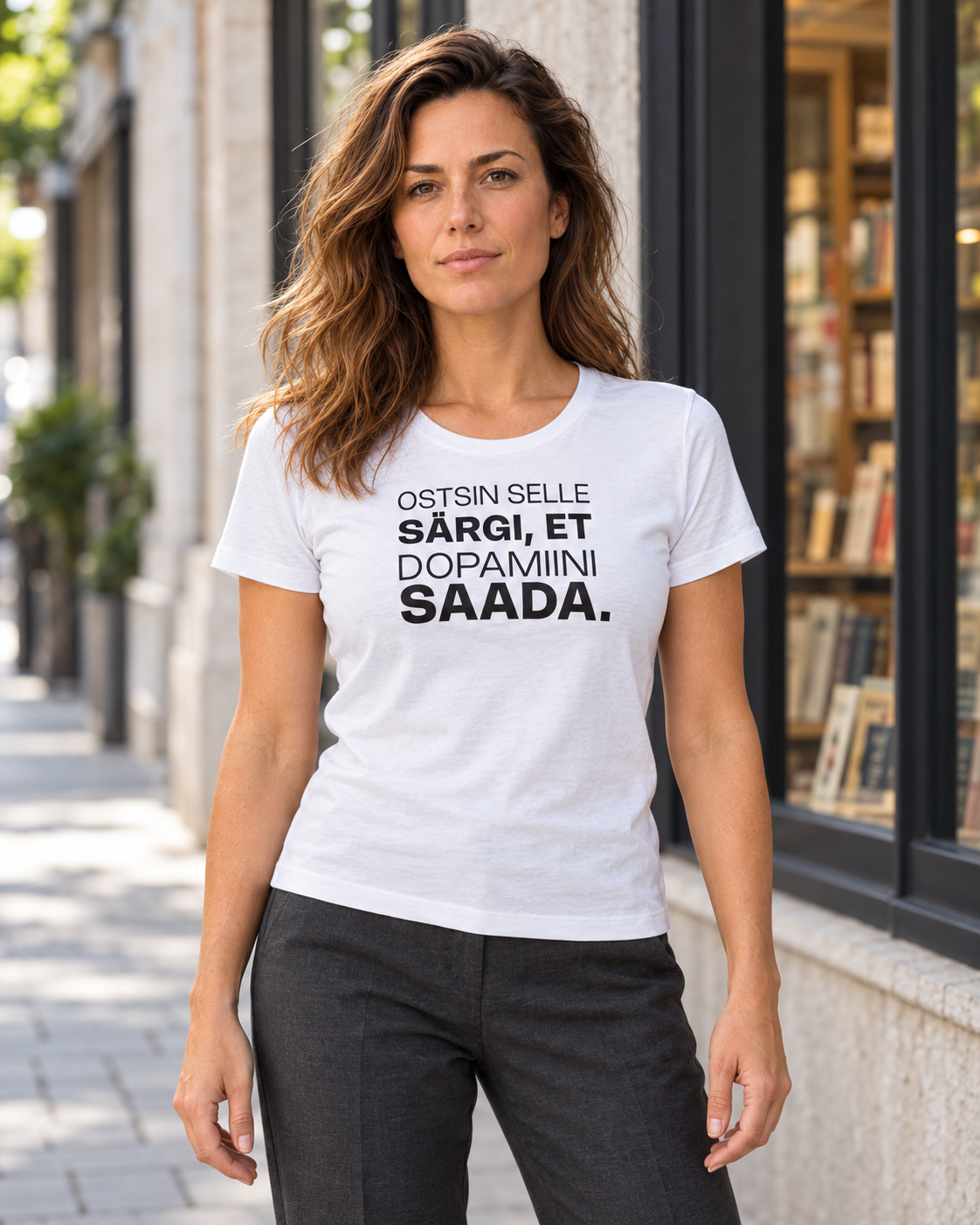
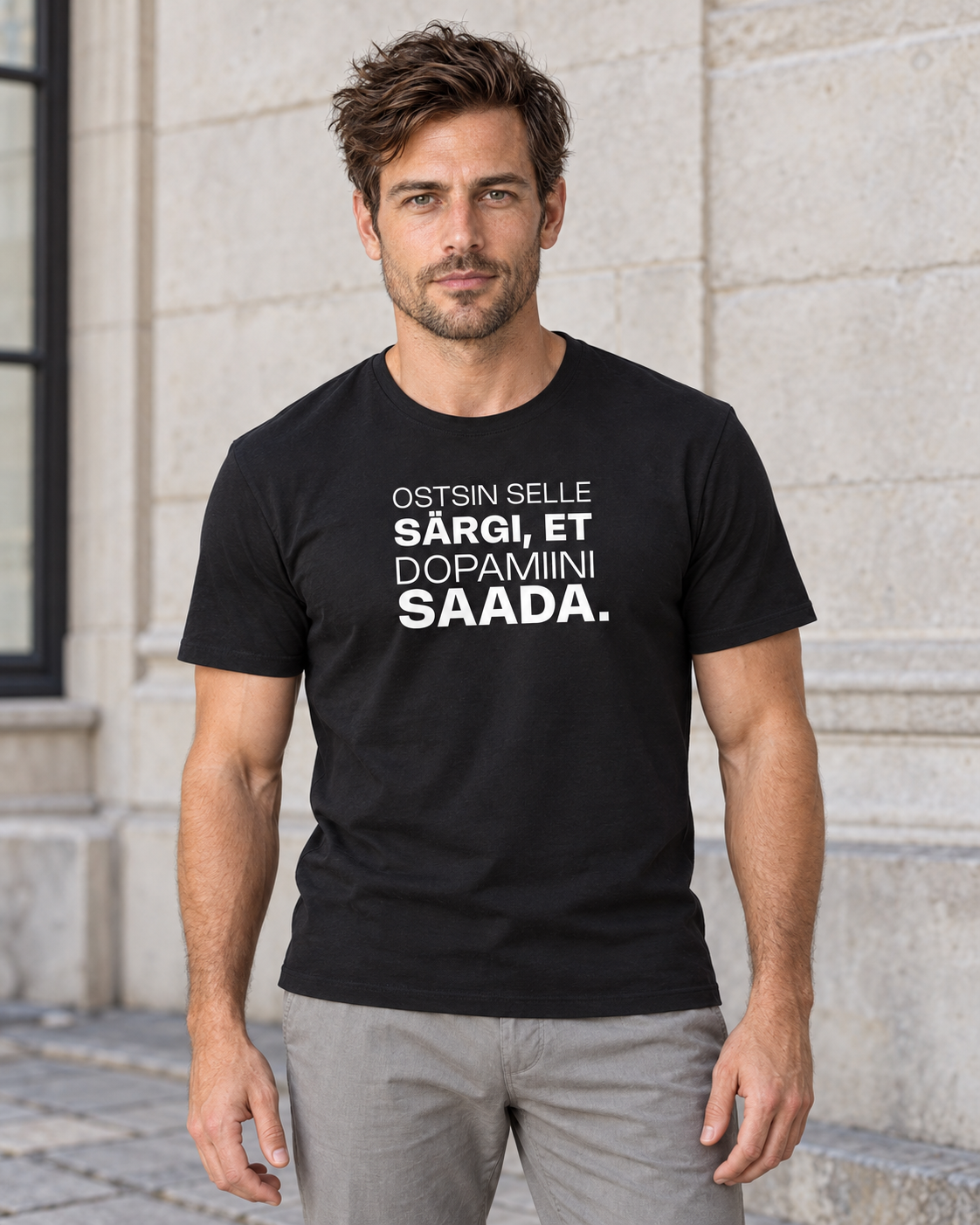
“Ostsin selle särgi, et dopamiini saada.” takes the explanation in a different direction. It means “I bought this shirt to get dopamine.” The purchase is complete, and the reason is printed across the chest. In fairly large letters.
There is a small confession in that sentence. Sometimes you just want something new that seems enjoyable to choose and receive. A thorough assessment of whether you need it can always come later. The shirt has got there first and written down the shorter version.
This shirt
The cleverest part of the sentence might be “this”. It points directly at the thing the words are printed on. On a separate piece of paper, it would be someone talking about a purchase. On a shirt, the sentence comes with its own visible example.
That creates a small loop: you buy a shirt that explains why you bought the shirt. Wear it, and the explanation comes along. No separate presentation required.
“I bought” puts the event in the past. Something has already happened. “To get” leaves the outcome open. The sentence describes an intention, without telling us whether everything went to plan. That small gap gives the joke more room than a firm announcement that everything is wonderful now.
Dopamine is the impressive-sounding word in this explanation. The print does not measure the wearer's mood or confirm an effect of the shirt. It dresses an ordinary wish in a scientific-sounding sentence. Then leaves it there for everyone to read.
Four lines, two weights
The design opens with the light lettering of “OSTSIN SELLE”. The next line, “SÄRGI, ET”, turns bold. “DOPAMIINI” returns to the lighter weight, and “SAADA.” gives the whole sentence a firm ending.
The most complicated word is not the heaviest. Dopamine gets an entire line, but the final emphasis falls on getting it. It is as if the sentence starts with a calm explanation and gradually becomes very clear about its objective.
The light and bold versions of Nohemi keep the letterforms related. Your eye can follow one sentence even as the emphasis shifts. Everything is in capitals, and the four lines form a broad, clearly defined block of text. The words take up their own space without an added illustration.
The comma and full stop are there too. At least the punctuation is in order.
The joke stays on your side
The shirt does not tell a passer-by what they are doing wrong. The sentence starts with the wearer's own purchase. That is part of its appeal: you can laugh at yourself without having to choose somebody else as the target.
You do not have to wear it as a confession about every purchase you have ever made. One sentence can describe a familiar moment. You see something, you like it, and for a moment no further explanation seems necessary. Later, you can smile at that wish just as easily.
If that kind of self-directed humour suits you, the shirt has a reason to be in your wardrobe. It does not prescribe an entire personality. Tomorrow you can be a very careful shopper and still wear the same sentence.
As a gift, it is worth thinking about a joke you share. If the recipient would smile at the sentence themselves, it may land well. Dropping hints about somebody's shopping habits is a different conversation.
The explanation fits on a bag too
The same thought appears on a black tote bag: “Ostsin selle koti, et dopamiini saada.” That means “I bought this bag to get dopamine.” One word changes, and the sentence now points to the bag itself.
The bag adds another image to the joke. It might hold the next round of purchases while its outside explains the purchase of the bag. A trip to the grocery shop gets a small running commentary, without the milk and bread having to answer for it.
Either way, you can decide whether it is a familiar thought, lettering you enjoy, or simply a sentence you would like to carry.
You can keep the receipt. The explanation is written down somewhere else now too.
Anti
(the guy who makes these shirts)
Blacksunset.ee