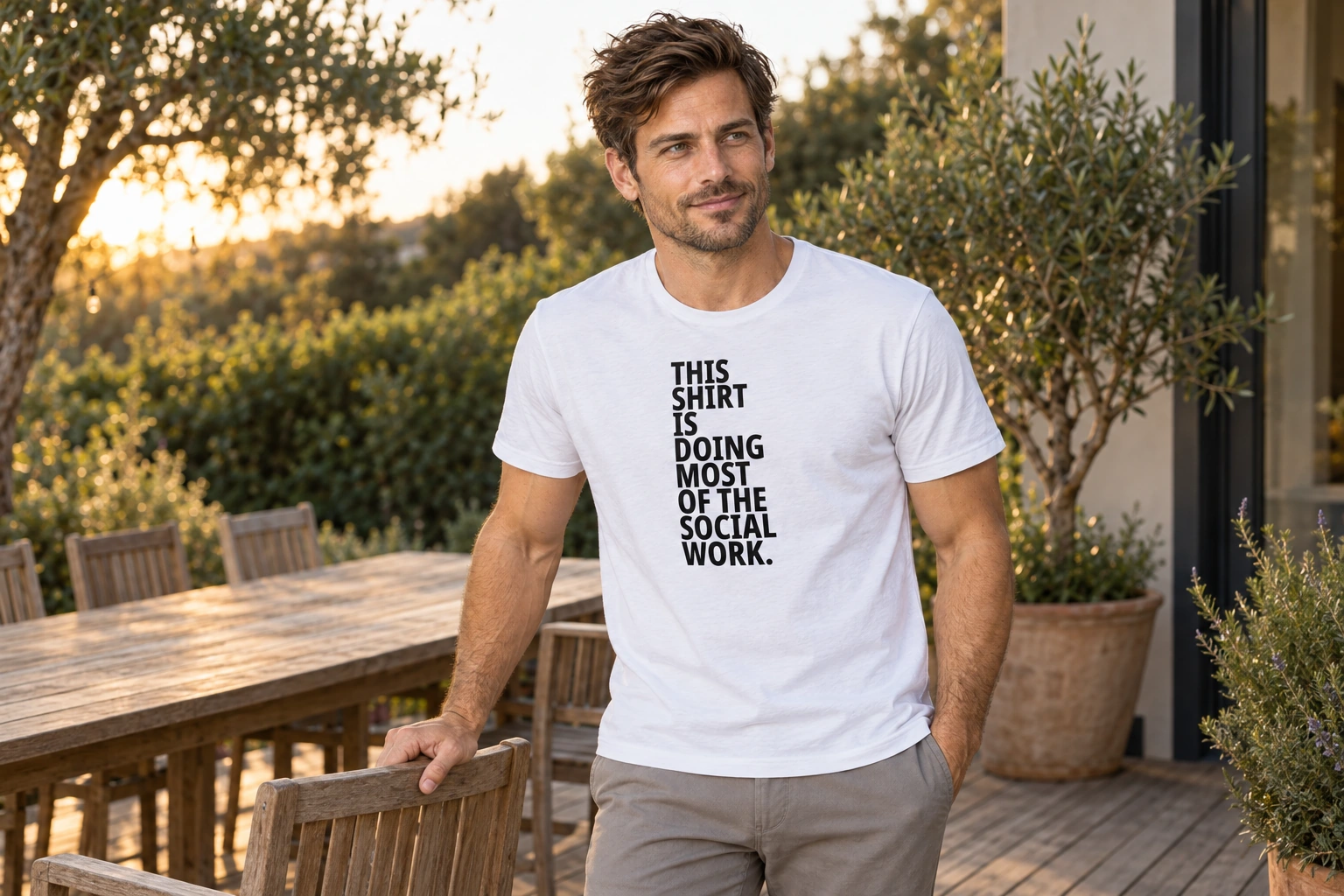
A conversation does not usually have a timesheet. Who found the topic, who made the first joke, who listened and who asked the next question at the right moment mostly goes unrecorded. That is probably for the best. Otherwise you would still have to add up everyone’s contributions at the end of the evening.
“This shirt is doing most of the social work.” has decided to open that account anyway. The shirt is carrying most of the workload. At least according to the shirt.
It is quite a wordy sentence for a garment claiming to take care of the conversation. It runs down the chest in a narrow column: THIS, SHIRT, IS, DOING, MOST, OF THE, SOCIAL, WORK. Eight lines, heavy block lettering and a full stop. The shirt takes its task seriously. At first glance, it has more to say than some opening lines.
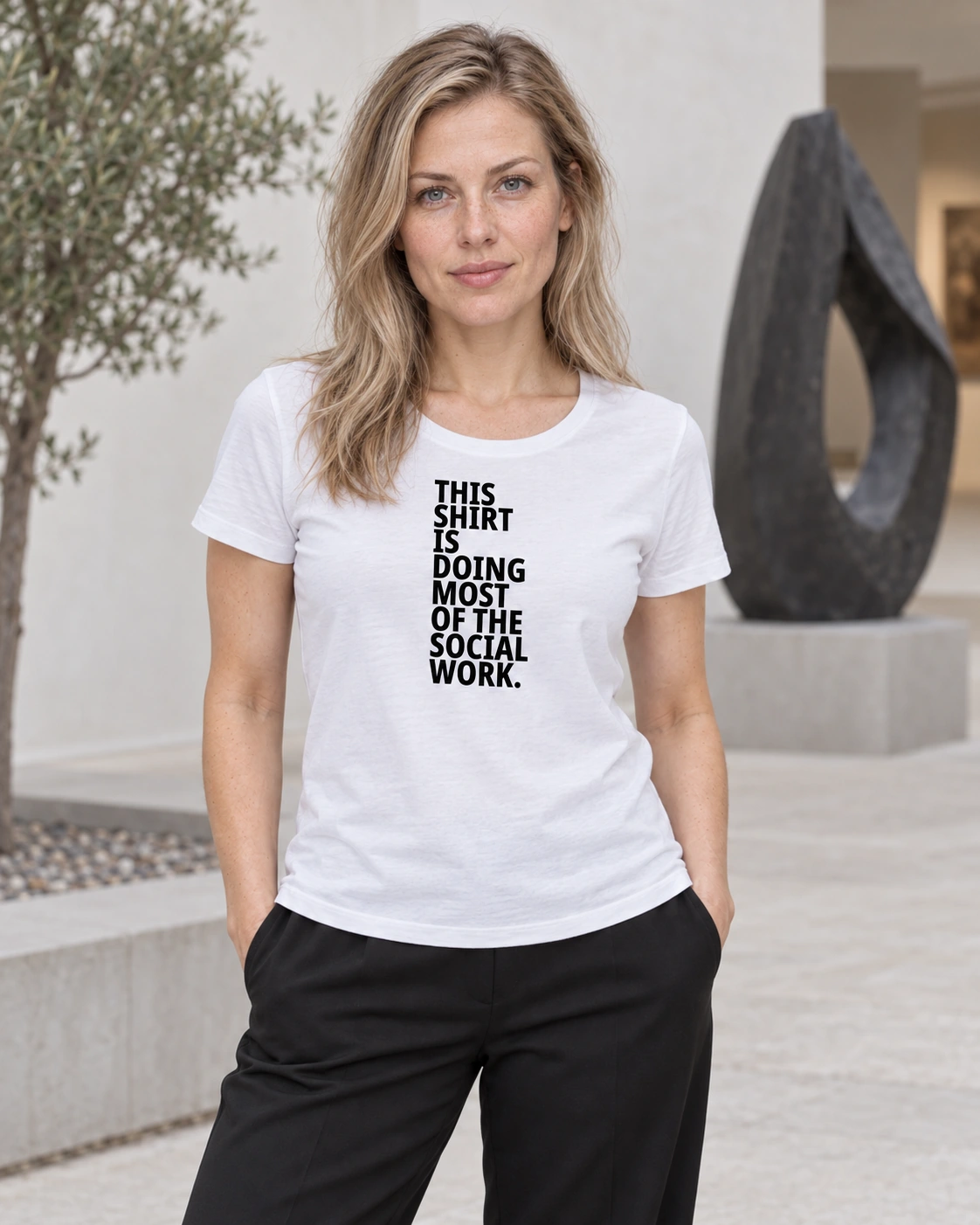
The length of the sentence adds something to the joke. In one short line, it would be a quick remark. Here your eye has to move downwards, word by word. By the time you reach “WORK.”, the text has been holding your attention for a while. It has done a small part of the work it is talking about.
The most important word is “most”
The sentence could say the shirt does all the work. That would be a fairly complete resignation: the garment socialises, the person is simply present. “Most” leaves the matter unfinished. The larger part. Something remains for the wearer.
That small reservation makes the message much more human. You can enjoy a joke about socialising and still be perfectly happy to have a conversation. You might talk more one evening and listen the next. A sentence printed on a shirt does not have to become your official character description, which you must then live up to every time.
There is good room for self-irony here. Going out with people can come with the odd expectation that you should immediately have something interesting to say. As if simply being there required a separate performance alongside it. This shirt gives you a way to smile at that expectation. It performs very eagerly on your behalf and makes its own eagerness visible at the same time.
In the Judging You story, the judging going on in your head takes the form of work in progress. “This Shirt Is Doing Most of the Social Work” moves the work outside: the visible text itself is busy. In both cases, the joke comes from describing something ordinary as a slightly too official assignment. Here, moreover, the person carrying out the assignment is a T-shirt.
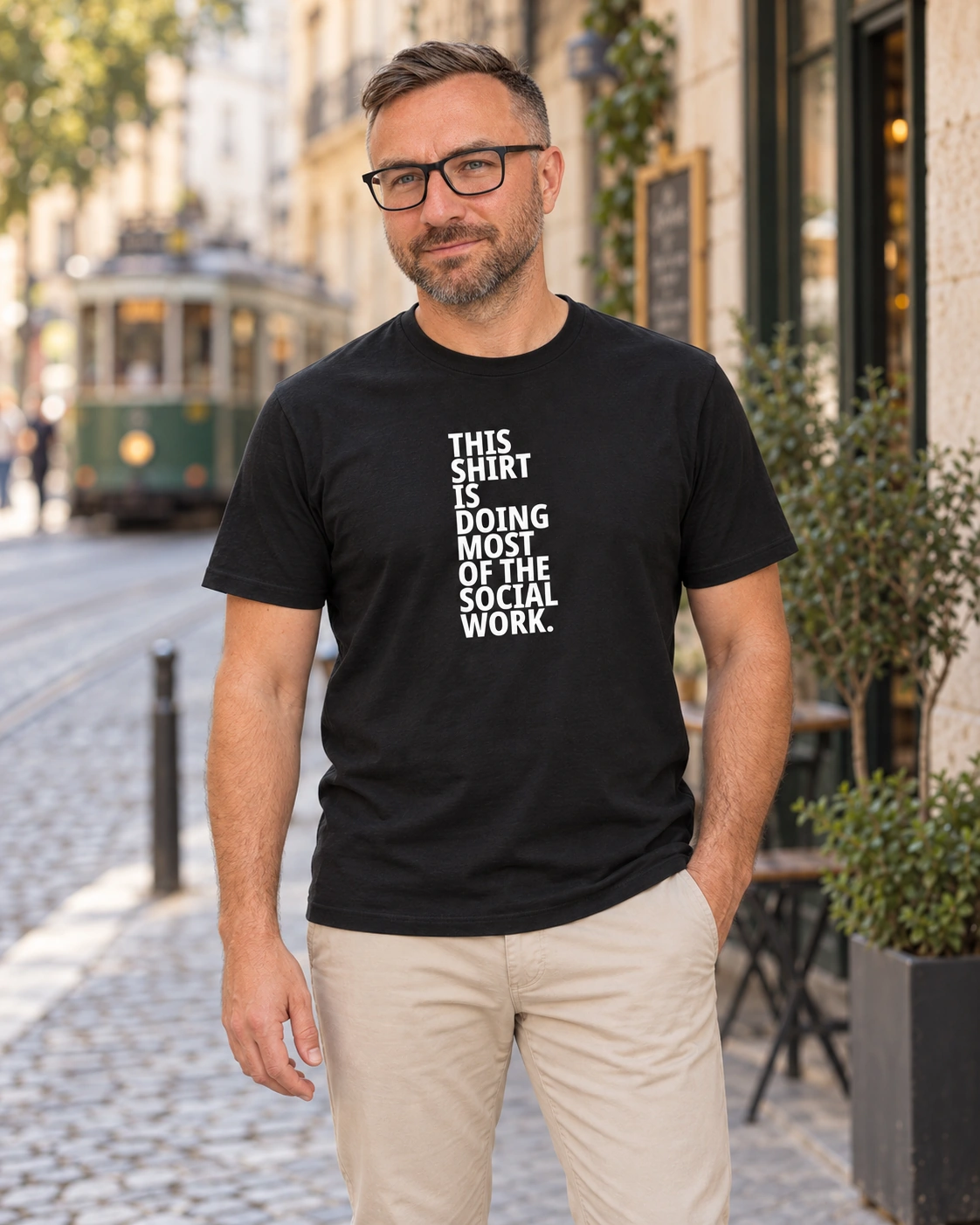
But what can a piece of lettering actually do? It can give people a shared starting point. Someone might notice the sentence, and you might notice that they noticed. A conversation could follow, or simply a shared smile. Neither needs further proof that the evening has now started successfully. A joke does not need a performance report.
That also distinguishes it from Not Here to Explain, whose message draws a boundary around explaining. The words here have already joined the group and taken on a task. They leave the wearer free to follow at their own pace. If you like this honestly rather lazy division of labour, the point of the shirt becomes clear quite quickly.
The nicest thing is that you do not have to take the text entirely seriously. You can wear it on an evening when you are the most talkative person at the table. Then the shirt’s self-assessment is simply especially generous. It still claims to have done most of the work.
The contributions can remain uncounted. The conversation goes on.
Anti
(the guy who makes these shirts)
Blacksunset.ee